


If you ever get the chance to visit Turkey, make sure to set aside an evening for a local meyhane. Originally places to enjoy a few drinks, they’ve evolved into the best restaurant experience Turkey has to offer, with an endless stream of mezes, seafood, atmospheric surroundings and white tablecloths. All set to a soundtrack of traditional Greek folk music.
Hold on a minute.
Greek? Why would Turkish restaurants play Greek music? Isn’t there a strong rivalry between the two countries, regular diplomatic incidents even?
While the word meyhane itself is Turkish (meaning “wine house”), these establishments predate the Ottoman conquest of Istanbul in 1453. Even during Ottoman rule, the meyhanes were run by Greeks, Albanians and Armenians. Their customers were primarily other Christians (and the godless, I suppose). Alcohol was (and, in theory at least, remains) forbidden in islam. Yet reports suggest there were plenty of muslim guests too, especially during the reign of more liberal sultans, such as during the mid 19th century. Under more pious rulers, however, muslim meyhane-goers risked prosecution.
I’d love nothing more than to visit a meyhane during its Ottoman heyday (there were plenty along the coast of the Golden Horn, where I live). Alas, I was born a century or two too late. But many of the features of the olden day meyhanes have remained, even as nearly all Greeks left the city following an increasingly anti-Greek sentiment from the late 19th century onwards (see: the Greek-Turkish population “exchange” and the Istanbul pogroms). Curiously enough, one of the remaining features is the music.

From wine to rakı
Meyhanes are fun establishments, designed to enjoy a few glasses of wine in good company, often with a few mezes to satisfy the appetite. During the late Ottoman period, rakı (pronounced “rak-uh”), an aniseed flavoured liquour so strong that Turks refer to it as “lion’s milk”, quickly took over as the drink of choice.
One of its foremost fans was none other than Mustafa Kemal Atatürk, the founder of the modern Turkish republic. He enjoyed debating the issues of the day with his closest advisers over a few glasses of rakı, consuming up to half a litre a day. Perhaps one of the few lessons not to take from this legendary figure – he passed away from liver disease at 57.
If you’ve had Greek ouzo or Arab arak, rakı will be familiar. It used to be enjoyed in tulip shaped glasses similar to what’s now used for black tea. Today, far less stylish tall and slim, often shapeless, glasses have taken over.

What we’ve lost in style, we’ve gained in choice. I imagine local brew ruled in the early days, but in modern times the state enforced a production monopoly which only ended in 2004. Since then, several brands have entered the market, many of them hailing from the Thrace region, known for its penchant for strong drinks. Meyhane menus now often run into pages of rakı alone.
In recent years, wine’s made a comeback too. After a long period of neglect, the number of wineries in Turkey have increased over the last few decades, and so has the quality. Many now prefer a glass or three of local wines over rakı. Meyhanes will certainly give you the choice.
The food!
I don’t know exactly when it happened, but at some point the food started taking on increasing importance at meyhanes, turning them into the full fledged restaurant experiences we enjoy today. But agreeing to meet at a meyhane is still a commitment to a long and fun evening involving a few glasses of alcoholic beverage. It’s not a place you stop by for a quick bite.
Meyhanes have two specialties. An endless string of mezes, all of which should be homemade, and seafood.
These are another reminder of their Greek ancestry. During the Ottoman times, it was primarily Greeks that went fishing and enjoyed the seafood from the Aegean. (Turks have always been more comfortable with mountains and animal husbandry.) The meze dishes you find at meyhanes are also predominantly Aegean. Food that isn’t necessarily “Greek” or “Turkish”, but a shared cultural heritage that long pre-date the nationalist labels we are so desperate to put on our foods today.

The mezes
An evening at a meyhane often starts with a simple question the moment you sit down. “Would you like some feta cheese and melon?”. Together with rakı, these form something of a holy trinity that nothing in the Bible could ever beat. The ultimate appetiser, if you like.
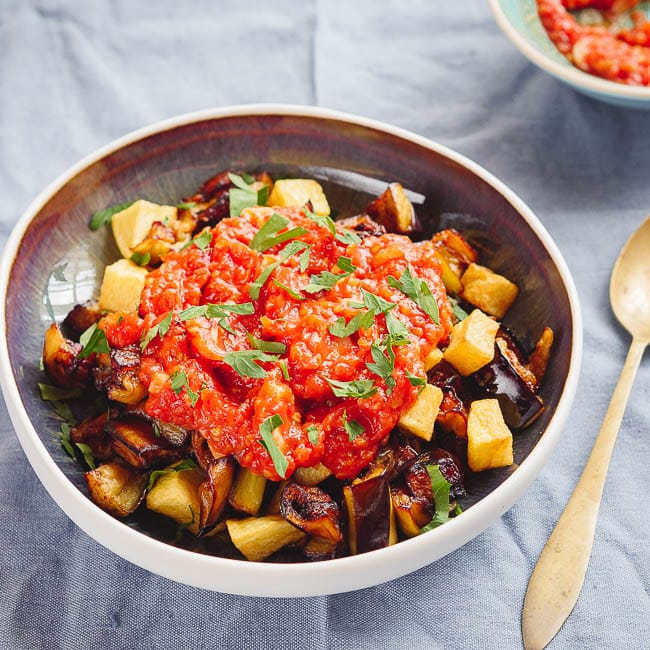
As you tuck into the cheese, melon and rakı, the waiter may show up with a huge tray showcasing today’s meze selection. Most of it will be yoghurt or vegetable based, with a few dishes of cured or marinated fish as well. Some of my favourites are girit ezmesi (“Cretan mash”, a creamy cheese dip with a pistachio pesto), köpoğlu (meaning “bastard”(!), a dish of aubergines, yoghurt and tomato sauce) as well as mustard marinated sea bass, a more recent invention.
The warm starters
Before the mezes start drying up, the waiter will be back at your table to tell you about today’s ara sıcak, literally translating as “intermediate hot [dishes]”. Or perhaps he’ll show up with a menu listing the options in writing – a development many of my Turkish friends strongly disapprove of. The service at a meyhane is of utmost importance, and should be verbal.
These warm starters are more substantial than the mezes. Squid, in the form of grilled or fried kalamari, and octopus are common, as is shrimps in butter or mixed seafood casserole. If they offer up lamb’s liver, order it – it’s usually very good. A fried börek with cheese and pastrami is also common (paçanca böreği). Your vegetable options are likely few, but may include fried zucchini slices (another Cretan dish) or herb fritters

The main: Grilled fish
There are usually so many delicious cold and warm starters to choose from that my friends and I never make it past the warm starters. We’re all simply too full.
But if you’ve still got space, your choice of fish from today’s catch takes centre stage next. Large fish is usually grilled and served simply with a few leaves of rocket and plenty of lemon wedges. Small fish are deep fried. A fresh salad, either before or alongside, is recommended.
A sweet finish
You’d be forgiven for thinking the alcohol may provide enough sugars for the evening, and in many ways you’re right. The selection of desserts is usually limited, but often features one of my favourites from Turkish cuisine: Tahin helvası. This is essentially tahini based helva that’s baked in stoneware until melted, then served piping hot with ice cream. Absolutely delicious, though so heavy you want to make sure there are a few of you sharing. A spoonful or two is usually enough.
Assuming you’ve chosen a proper meyhane, your evening will be completed by a complementary plate of seasonal fruit and cups of freshly brewed black tea, as the tables around you may join in on sing-alongs amidst rowdy laughter.
A few recipes to try
Here are a few meze dishes you often find at meyhanes:






I just remembered – it was 40 years ago – that Ahmed’s wife was a dietician, not a nutritionist. Apologies to the lady’s memory 🙄
I blame Saudi Arabia for most of my bad influences. I used to work for a Norwegian cement importer (1982-84) and a Turkish guy called Ahmet Kirozoglu was one of my favourite colleagues. His wife was a nutritionist, but in spite of that she cooked like a seductress. Is 10% of the story. And I do most of my own cooking.
Turkish cooks are good!
It must be something to do with the fact that I am learning both Norwegian and Turkish. What are the chances?
Wow, what are the chances indeed! What’s brought together those two languages for you?
What a pleasant surprise! I was only looking for a recipe for esme salad, and luckily Meze popped up as the first hit. Brilliant selection of recipes, backed by huge amounts of history, culture and everything else
Thanks so much for your kind comment! Really glad to hear you like the background stories.