Recipe
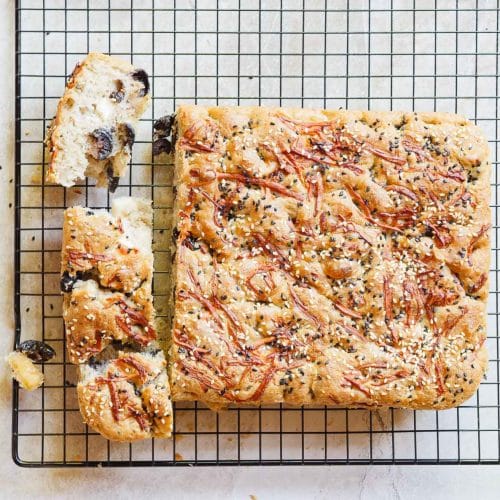
Cypriot olive halloumi bread
Amazing accompaniment to salads and soups – or even on its own.
Yield: 26×20 cm (10×8 in) loaf
Email
Print
Pin
Ingredients
- 320 g water
- 6 g dried yeast
- 400 g plain flour (all-purpose), all-purpose
- 6 g salt
- 1 Tbsp dried mint
- 100 g extra virgin olive oil, (I use a mild one), plus extra for topping
- 250 g halloumi, of which 225 g/8 oz cut into 1 cm (⅓ in) cubes and 25 g/1 oz grated
- 120 g black olives, pitted (net weight 90–100 g / 3 ½ oz)
- 1 tsp sesame seeds
- 1 tsp nigella seeds
How I make it
- Mix the water, dried yeast and flour in a large bowl. It only needs to come together. Cover and leave to rest for 30 minutes.
- Line 1 baking tin measuring 26×20 cm (10×8 in) with baking parchment. Grease with olive oil.
- Add the salt, dried mint and olive oil to the dough. Incorporate by squeezing the dough between your fingers to combine everything thoroughly. Add the halloumi cubes (not the grated halloumi) and olives. Gently mix until well distributed. Pour the dough into the prepared baking tin.
- Cover the tin with plastic wrap or a moist towel. Leave to rise until doubled in size, 1–2 hours or more, depending on the temperature in your kitchen and the strength of your yeast.
- Meanwhile, preheat the oven to
 220 °C, top and bottom heat. If you have a baking stone, place it in the middle of the oven to heat through.
- When the dough is ready, drizzle 1–2 Tbsp extra virgin olive oil over the top. Oil your hands and press dimples partially into the dough as you would with focaccia. Top with the grated halloumi, sesame seeds and nigella seeds.
- Bake in the middle of the oven until the bread is golden and cooked through, 25–40 minutes.
- Cool the bread completely before slicing into pieces.
Notes
On US measurements for baking: I strongly advise always using weight measurements in baking. Volume measures are simply too inaccurate, often leading to disappointing results. Most kitchen scales, even cheap ones, usually have the option to display grams as well as ounces. To ensure you are able to replicate the recipe, I only provide metric weight measures for baking recipes.